Artist: Lou Sheppard
Artwork title:
Year: 2025
Dimensions: 12”W x 84”H each
Medium: Series of 14 vinyl banners on lightposts
Location: 7 double-wide banners in roundabout at Barrington & Nora Bernard St, on the north side.
About the Artist

Lou Sheppard (@shep_shape) works in interdisciplinary audio, performance and installation based practices. His work responds to the social and material histories of sites: bodies, and environments. His work questions and disrupts systems of power by deconstructing the language, architectures, genealogies, and taxonomies that hold these systems in place.Lou has created commissioned works for galleries and sites across Canada, including The Banff Centre, at The Art Gallery of York University, The Confederation Centre for the Arts and the Toronto Biennial, as well as internationally, at Kumu Kunstimuuseum in Estonia, in the Antarctic Biennial, and at Titanik Gallery in Finland. Lou has participated in numerous residencies, including Rupert in Lithuania, the International Studio Curatorial Program in Brooklyn, NY., La Cité des Arts in Paris, and as participant and faculty at The Banff Centre. He has been longlisted for the Sobey Art Award in 2018, 2020 and 2021. Lou is a settler on the traditional and unceded territory of the Mi’kmaq in Mi’kma’ki/Nova Scotia. https://www.lousheppard.com/
About the Artwork
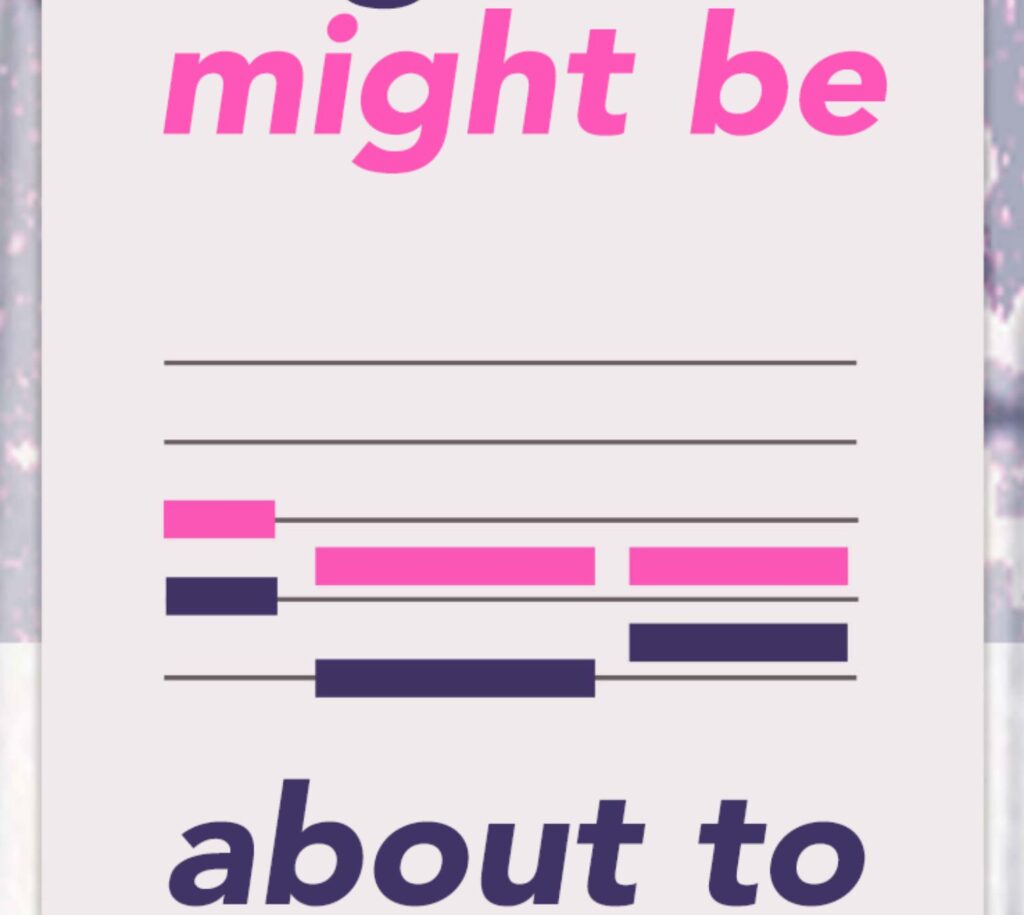
Interchange Chorus consists of 14 sets of banners that score a performance for car horn and voice. Each banner contains a part of the score, some with parts for two voices, and some with parts for four car horns. Placed around the roundabout, the performance imagines two pedestrians and four cars or cyclists (each in one of the four lanes of the roundabout) as performers of the score.
The text fragments that form the lyrics of the piece are taken from letters, planning documents and other archival sources which speak to the proposed Harbour Drive and Cogswell Street Interchange and destruction of historic buildings along the Halifax waterfront. These text fragments have been arranged to form a loose narrative that speaks to the contentious history of the interchange and the tension between a city and its citizens. The narrative begins with statements of concern and dissatisfaction with the proposed development and evolves to statements of hope and desire for the future of the city.
The imagery in the background of each banner is based on archival planning documents for the Cogswell Street Interchange and Harbour Drive. These images have been reworked and abstracted as a reflection of the layered and complex history of this proposal and development.
Using an unfixed notation system (which indicates relative pitch and rhythm rather than specific notes) the score is meant to be both visually curious and ultimately playable. In the roundabout they are a proposition of unity and poetry as commuters move throughout the city.
To read the score and perform the Interchange Chorus:
The car horn notation is divided by lane, with one car in each lane. Starting at the bottom of the score a driver sounds their horn when their score is coloured in and stays quiet when it is blank. The count should be 60 beats per minute, or one second per space in the scale.
Car horns are generally tuned to F, the fourth note in standard musical alphabet, though their notes can vary between manufacturers. This score is meant to be more rhythmic than tonal, though there is potential for some strange harmonies between the different horns that play the score. Cyclists can play the score using their bells which are generally tuned to D flat.
The score was originally composed using an F harmonic major scale, using notes F, G, A, B flat, C, D flat, E, F. The idea, however, is not to recreate a melody each time, but to find your own melody amongst the sound of the traffic. The coloured blocks on each staff offer a relational melody and rhythm, though singers should improvise as they go. Words divided by dashes are meant to be drawn out into separate syllables. Singers should count 60 beats per minute, or one second per count.
To sing the chorus choose a starting note comfortable for your voice. Listen to the sound of the traffic and see if you can find a note that fits into your soundscape. You can start the notation on your starting note, and then determine your next note based on how far away the next coloured block is from your starting note. If you’d like, you can count up and down by whole notes (like do, ri, mi, fa, so, la, ti, do, or F, G, A, B, C, D, E, F.) Think of the lines of the score like the rungs of a ladder, you can step up by whole steps (one rung to the next: do to ri, or F to G) or half steps (hovering in the space between the rungs like C to D flat.) If you read musical notation this might feel counter-intuitive, since you are used to a musical staff. This notation system is based on midi notation used by computers and is, hopefully, easier for anyone to read by sight. You can also approximate the sounds of the notes indicated on the score based on the traffic sounds around you. If you’re not keen to sing you can also chant the lyrics following the rhythm of the score and traffic sounds.
Location
7 double-wide banners in roundabout at Barrington & Nora Bernard St, on the north side.